
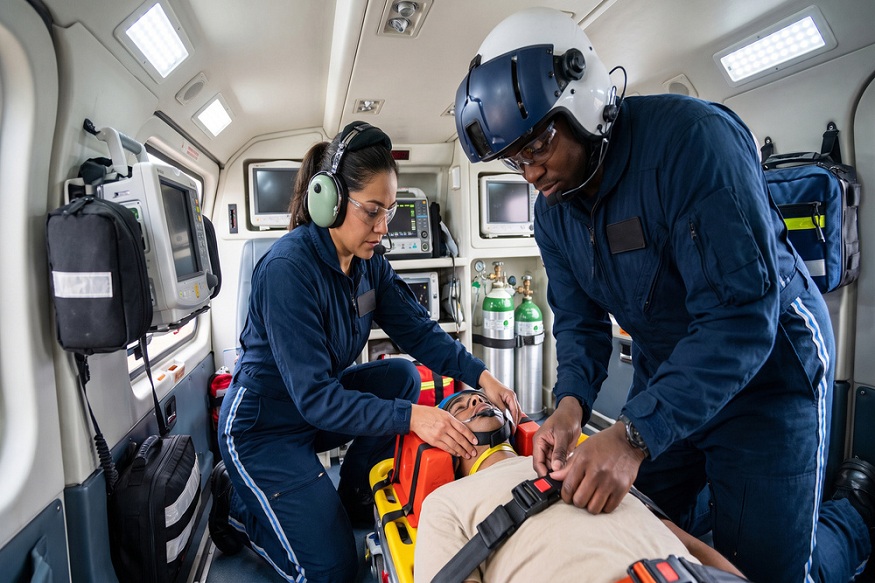
Bolting a monitor to a wall takes about ten minutes. Add an oxygen bottle, strap down a stretcher, and you’d think the job was finished. It isn’t. Fitting the equipment is genuinely the simple part of a medical interior. Ask anyone who has delivered one and they’ll tell you the installation itself is a fraction of the programme, often the last few days of something that started months earlier. The difficulty lives either side of it, in work that leaves no visible trace once the panels go back on.
The Floor Fights Back
Take the floor. This isn’t a metal plate where you can drill holes at your whim; it’s a system that performs a function, and every hole modifies the load distribution throughout the airframe. Make one in the wrong spot and you’ll have a component that’s not as strong as the blueprints claim. Thus, the engineers will spend days locating the hard points and figuring out how to attach a heavy component without robbing elsewhere.
Read More: The Difference Between Cleaning Your Teeth and Strengthening Them
Weight Is a Sneaky Problem
Here’s the awkward bit. Everything weighs something, and the aircraft has a ceiling on what it can lift. Exceed it and the machine isn’t safe. Even a few pounds eats range and adds to fuel burn on every sortie. The load has to sit right as well, fore and aft, left and right. Get the distribution wrong and the helicopter flies out of trim. Layouts get planned like a seesaw for exactly that reason. The gear goes in easily enough; balancing it is the actual problem.
Rules on Top of Rules
Then the paperwork, and there’s a mountain of it. What you may install, and how, is tightly regulated. Every modification needs approval, testing and sign-off before a patient comes anywhere near the aircraft. Nobody rubber-stamps it, either. Each change faces real scrutiny to prove it’s safe. Companies specializing in medical helicopter interiors, like LifePort, know these rules inside and out, and that deep knowledge helps crews get safe, approved aircraft into the air faster. Without it, programmes stall for months on end.
Making It All Talk Together
Count what’s drawing power in a loaded cabin. Monitors, a ventilator, cabin lighting, radios. All running together, none of it allowed to overload the electrical system or interfere with avionics. That’s a wiring problem almost nobody thinks about. Every circuit gets mapped so medical kit and flight systems leave each other alone. One poor termination could knock out something that matters at the worst possible moment. What’s behind the panels counts as much as what’s bolted in front of them.
Built for the People Using It
Even then you’re not done. Crews have to work in this space, usually at night, usually with the airframe shaking under them. An item an inch beyond comfortable reach costs seconds nobody has. So layouts get tested against how people actually work. Where does the nurse stand? Can two clinicians treat one patient without getting in each other’s way? Those answers drive the final design. Installing equipment is easy. Making the cabin work for the people inside it takes thought.
Read More: Unlocking Wellness with Personalized Genetic Health Reports
Conclusion
From the outside it looks like nothing. Bolt it down, go flying. Beneath that sit the structure, the weight and balance, and the certification. Not to mention the wiring and the workflow. None of it shows up in a photograph of a finished cabin, which is precisely why it gets underestimated. Good cabins come from people who worry about all of it. The crews who fly them rarely think about any of it, and that’s the point: a well-built interior simply gets out of the way. Equipment is where you start, not where the work is.